

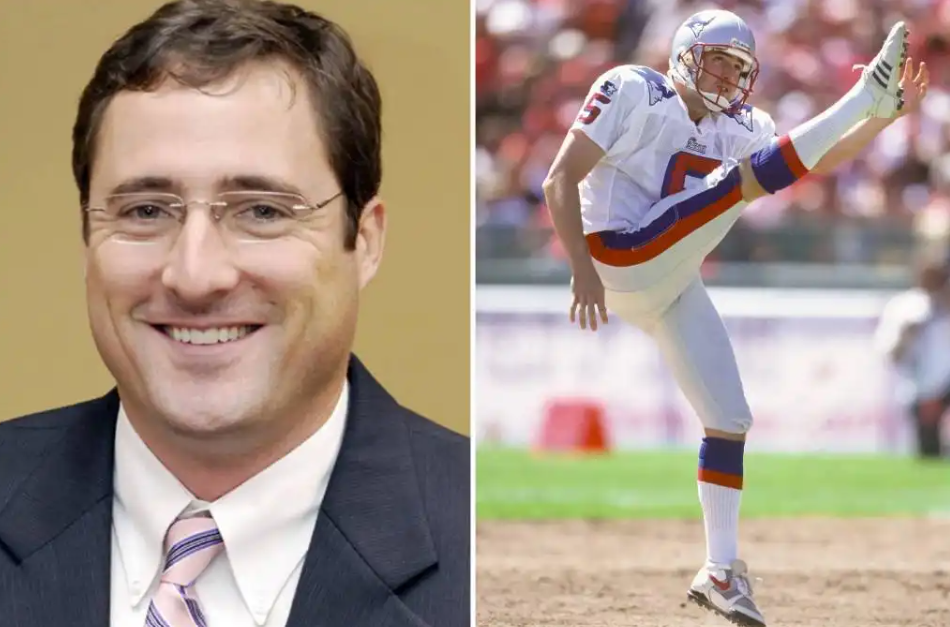
A former NFL player who walked away from professional football to become a successful orthopedic surgeon is now battling a devastating neurological disease that he claims was caused by repeated head injuries during his college football career.
Patrick O’Neill, 55, has filed a lawsuit against the NCAA after being diagnosed with Parkinson’s disease, alleging that years of unprotected hits to the head while playing at Syracuse University ultimately left him unable to continue the medical career he spent decades building.
The lawsuit, filed November 2 in Manhattan Supreme Court, accuses the NCAA of failing to protect O’Neill from the dangers of repeated concussions and withholding information that could have changed his decision to play football.
For O’Neill, the diagnosis represents a heartbreaking turn in a life marked by extraordinary accomplishments both on and off the field.
He attended Syracuse University on a football scholarship from 1990 to 1993, earning recognition as an Academic All-American and University Scholar while establishing himself as a talented punter.
His success eventually led to the NFL, where he began his professional career with the New England Patriots in 1994.
During his rookie season, O’Neill was named to the NFL’s All-Rookie team. He later played for the Chicago Bears, New York Jets and Jacksonville Jaguars.
But despite achieving what many young athletes dream of, O’Neill had an even bigger ambition.
He wanted to become a doctor.
After leaving professional football, he pursued that dream and was accepted into the prestigious Johns Hopkins University School of Medicine in Baltimore in 1998.
Over the following years, he built an impressive career as an orthopedic surgeon, eventually becoming chief of orthopedic surgery at Sarasota Memorial Hospital in Florida.
He also established himself as a specialist in foot and ankle surgery, helping patients regain mobility and recover from painful injuries.
Now, according to his lawsuit, the neurological condition has severely affected his ability to perform the very work he dedicated his life to mastering.
“This brain disease has forced Patrick O’Neill to suffer great loss, including in his ability to practice as an orthopedic surgeon,” the complaint states.
Parkinson’s disease is a progressive neurological disorder that can cause tremors, muscle stiffness, slowed movement and difficulties with balance and coordination.
For someone whose profession depends on precision and steady hands, those symptoms can be particularly devastating.
But O’Neill believes his medical struggles could have been prevented.
In his lawsuit, he claims he repeatedly suffered head trauma during games and practices at Syracuse but was encouraged to continue playing rather than being removed for medical evaluation.
He alleges that the NCAA knew about the potential long-term consequences of repeated concussions but failed to provide adequate warnings, protective regulations or properly trained medical personnel.
According to the complaint, college football officials had access to medical research about the dangers of repeated head injuries decades before O’Neill took the field.
The lawsuit specifically argues that the NCAA was aware of possible connections between repetitive head trauma and neurological conditions, including Parkinson’s disease, but failed to take sufficient precautions.
“Despite the trauma, Patrick O’Neill was never removed from the field for examination, rest, and treatment,” the complaint alleges.
O’Neill also contends that the organization ignored medical recommendations concerning athletes who had suffered multiple moderate concussions.
His attorneys argue that he was never given enough information to make an informed decision about the risks of continuing to play.
The lawsuit raises broader questions about how college football programs handled concussions during the 1990s, long before today’s heightened awareness of traumatic brain injuries.
Although research has identified associations between repeated head impacts and certain neurological conditions, the relationship between football-related head trauma and Parkinson’s disease remains medically complex. A direct causal link in O’Neill’s individual case has not been established by a court.
The NCAA has not publicly responded to the allegations, and Syracuse University has not issued a statement addressing the lawsuit.
O’Neill’s claims have also not been tested in court.
The case comes amid growing scrutiny of the long-term health consequences experienced by former football players, particularly those who competed before modern concussion protocols became widespread.
For O’Neill, however, the dispute is deeply personal.
After spending years pursuing success in professional sports, he made the unusual transition into medicine, ultimately building a respected career helping others overcome physical challenges.
Now, the same man who once treated patients facing serious orthopedic problems says he is struggling with a condition that has dramatically changed his own future.
As the lawsuit moves forward, O’Neill is seeking to hold the NCAA accountable for what he alleges were decades of failures to protect student-athletes from potentially life-altering injuries.
The case remains pending, with no court determination yet on whether his college football injuries contributed to his Parkinson’s diagnosis or whether the NCAA bears legal responsibility. New York Post+1