

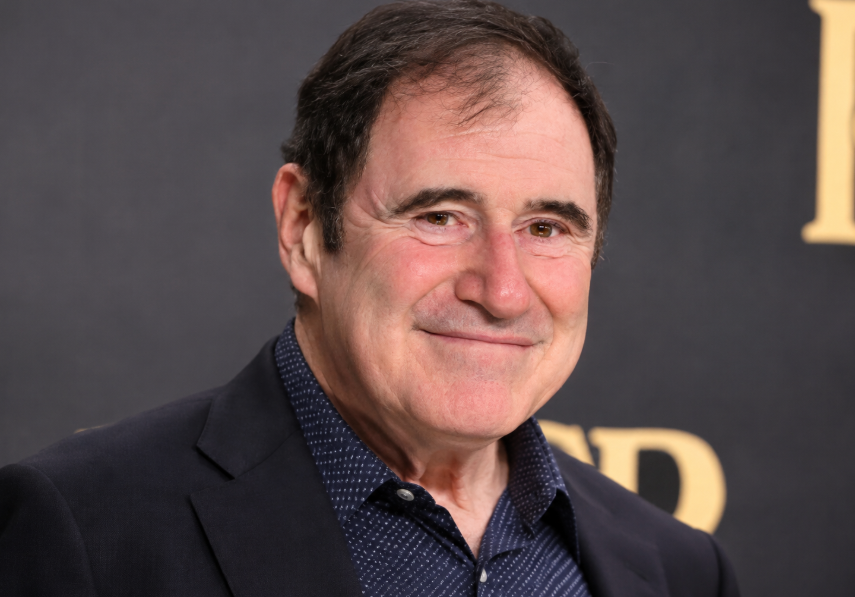
Richard Kind has spent decades making audiences laugh, but the beloved Hollywood actor has revealed that he’s been privately struggling with a skin condition that has affected both his appearance and his confidence for more than 30 years.
The 69-year-old star, best known for his roles in Spin City, Curb Your Enthusiasm and Only Murders in the Building, opened up about living with vitiligo during the November 17 episode of Michael Rosenbaum’s Inside of You podcast.
Although Kind has learned to live with the condition, he admitted that its emotional impact can still be overwhelming, sometimes even appearing in his nightmares.
“I have it all over my body,” he told Rosenbaum.
Kind explained that his symptoms first appeared when he was approximately 34 years old, shortly after returning from a vacation.
At first, he noticed a few small white patches developing on his skin. But over time, the discoloration began spreading to other parts of his body.
“I came back and all of a sudden, I started getting a white spot here, and then a white spot here,” he recalled, explaining that even scratches sometimes seemed to trigger new areas of pigment loss.
Vitiligo is a chronic autoimmune condition in which the cells responsible for producing skin pigment are attacked or stop functioning properly. As a result, patches of skin lose their natural color.
Although the condition is not contagious or life-threatening, its visible effects can be emotionally challenging, particularly for someone whose career involves appearing in front of cameras.
For Kind, those struggles have followed him for decades.
During the interview, he made a heartbreaking admission about recurring dreams in which he imagines himself appearing on television and suddenly becoming aware of how his skin looks.
“I have dreams that I am a newscaster and I’m on film, and I see it at night,” he said, describing the experience as horrible.
The actor also acknowledged that he has never fully understood what caused his condition.
He wondered whether stress or a past viral illness might have played a role, although he emphasized that he doesn’t know what triggered it.
Medical researchers believe vitiligo develops through a combination of autoimmune activity, genetic susceptibility and environmental factors. Stress or skin injuries may trigger or worsen symptoms in some people, but the exact cause is not always clear.
Beyond its emotional effects, Kind said the condition has changed how he approaches everyday activities.
He enjoys playing golf and spending time outdoors, but he must be especially careful about sun exposure because the affected areas of his skin lack the pigment that normally provides some protection from ultraviolet radiation.
The actor explained that he now relies heavily on sunscreen, since his skin can burn easily without him immediately noticing.
Over the years, Kind has explored possible treatments, including experimental approaches intended to restore pigmentation. Ultimately, however, he decided against pursuing further treatment.
“I’ve decided to live with the illness,” he explained.
His candid comments offered a different glimpse of an entertainer who has built a reputation as one of Hollywood’s most recognizable character actors.
Kind became a household name in the 1990s through his performances on Mad About You and Spin City, before winning over another generation of viewers with his appearances on Curb Your Enthusiasm and Only Murders in the Building.
He’s also a familiar voice to Disney and Pixar fans, having appeared in animated favorites including A Bug’s Life, Inside Out and Inside Out 2.
Despite his long-running success, the actor admitted that his skin condition has continued affecting how he sees himself, even when others may not notice it.
Kind is not the only well-known entertainer to discuss living with vitiligo. Michael Jackson, model Winnie Harlow and actor Jon Hamm have also been associated with the condition.
While there is no guaranteed cure, treatments may help restore pigmentation or slow the progression of vitiligo in some patients. Dermatologists also recommend sun protection to reduce the risk of burns and other complications.
For Kind, however, the decision to stop pursuing treatment has been part of learning to accept a condition that has accompanied him through much of his adult life.