

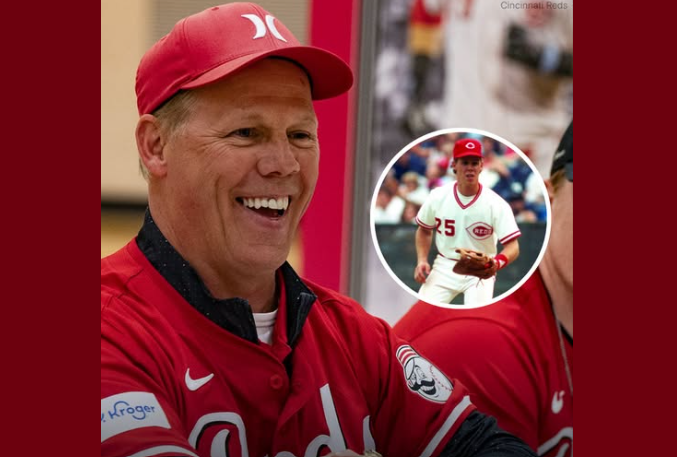
The baseball world is mourning the loss of Todd Benzinger, the former Cincinnati Reds first baseman who made history by catching the final out of the 1990 World Series, securing one of the most unforgettable championships in franchise history.
Benzinger died Wednesday, October 21, at the age of 63, the Reds announced Thursday. His cause of death has not been publicly disclosed.
The news has saddened generations of Cincinnati baseball fans who remember Benzinger as an important member of the legendary team that swept the heavily favored Oakland Athletics to win the 1990 World Series.
Although his major league career spanned nine seasons and five organizations, one extraordinary moment forever secured his place in Reds history.
On October 20, 1990, Cincinnati was just one out away from winning its first World Series championship since 1976.
With the Reds leading Oakland 2-1 in the ninth inning of Game 4, Athletics outfielder Carney Lansford lifted a foul pop-up near first base.
Benzinger raced toward foul territory, tracked the ball and made the catch that officially ended the game and completed Cincinnati’s stunning four-game sweep.
Within seconds, his teammates rushed onto the field in celebration as the Reds became World Series champions.
The unforgettable play remains especially meaningful to fans because the 1990 championship is still Cincinnati’s most recent World Series title.
More than three decades later, Benzinger was still closely associated with that historic team, regularly attending events and reconnecting with the community that had embraced him throughout his career.
Following his death, the Cincinnati Reds released an emotional statement remembering both his accomplishments on the field and his lasting relationship with the organization.
The team expressed its gratitude for Benzinger’s role in one of its greatest seasons and extended condolences to his family, friends and former teammates.
Rick Walls, executive director of the Reds Hall of Fame and Museum, said the famous World Series catch represented only one part of Benzinger’s legacy.
According to Walls, the former first baseman was a generous supporter of the Reds community who enthusiastically participated in events and spent time with fans long after his playing days ended.
“We will miss his friendship, his kindness and his presence in our community,” Walls said.
For Benzinger, Cincinnati baseball was more than a professional assignment. It was part of his life from childhood.
Born February 11, 1963, in Dayton, Kentucky, just across the Ohio River from Cincinnati, he grew up in the region and attended New Richmond High School in Ohio.
His talent on the baseball diamond attracted the attention of major league scouts, and the Boston Red Sox selected him in the fourth round of the 1981 MLB Draft.
After several seasons developing in the minor leagues, Benzinger made his major league debut with Boston in 1987.
He played two seasons for the Red Sox before being traded to Cincinnati ahead of the 1989 season, giving the hometown player an opportunity to represent the team he had grown up near.
The move proved to be a turning point.
Benzinger became an everyday player for the Reds in 1989, enjoying the most productive offensive season of his career. He hit 17 home runs, drove in 76 runs and appeared in 161 games.
The following season, Cincinnati emerged as one of baseball’s biggest surprises under manager Lou Piniella.
The Reds led the National League West from the opening day of the 1990 season through its conclusion, an accomplishment that earned them the nickname the “Wire-to-Wire Reds.”
Their roster included future Hall of Famer Barry Larkin, Eric Davis, Chris Sabo, Paul O’Neill and a dominant bullpen led by Randy Myers, Rob Dibble and Norm Charlton.
After defeating the Pittsburgh Pirates in the National League Championship Series, Cincinnati faced an Oakland team featuring stars such as Rickey Henderson, Mark McGwire and Jose Canseco.
The Athletics had been widely expected to win the championship, but Cincinnati delivered one of the most memorable upsets in World Series history.
Benzinger’s game-ending catch provided the perfect final image of that remarkable run.
His career continued after the championship, with the Reds trading him to the Kansas City Royals during the 1991 season.
He later played for the Los Angeles Dodgers and San Francisco Giants before finishing his major league career in 1995.
Across 924 games, Benzinger recorded 733 hits, 66 home runs and 376 RBIs, finishing with a .257 batting average.
But retirement did not end his involvement in the sport.
Benzinger remained passionate about developing young talent, eventually returning to the Reds organization as manager of the Dayton Dragons, Cincinnati’s Class-A affiliate, during the 2009 and 2010 seasons.
He also devoted considerable time to coaching youth baseball in New Richmond, where he remained a familiar and respected figure.
His commitment to younger players reflected a lifelong love of the game and a willingness to share the knowledge he had gained during his years in professional baseball.
Beyond coaching, Benzinger regularly attended Reds Caravan events, Redsfest celebrations, fantasy camps and programs organized by the Reds Hall of Fame and Museum.
For fans who remembered watching the 1990 championship, those appearances offered opportunities to reconnect with a favorite player and celebrate one of Cincinnati’s proudest sports memories.
For younger fans, Benzinger represented a direct connection to the franchise’s championship history.
His death comes just one day after the 36th anniversary of the Reds’ World Series victory on October 20, 1990, making the news particularly poignant for longtime supporters.
Although the organization has not released details about his death, tributes have emphasized the warmth, generosity and dedication that defined his life beyond baseball.
Benzinger may always be remembered for the final catch that brought a World Series championship home to Cincinnati, but his impact extended well beyond that single play.
From helping young athletes develop their skills to spending time with loyal fans, he remained deeply connected to the sport and community he loved.
And for Reds supporters, the image of Benzinger raising his glove in foul territory before his teammates rushed toward him will remain an unforgettable moment in Cincinnati baseball history.