

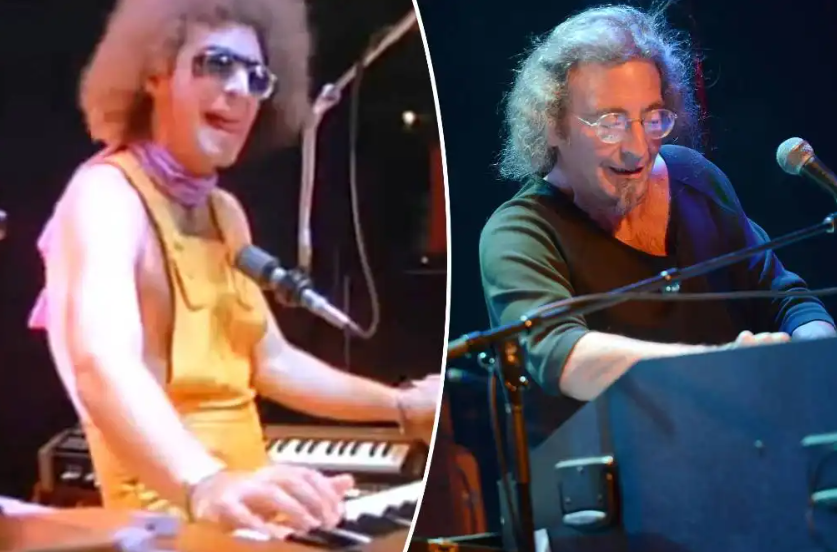
Tommy Mars, the celebrated keyboardist whose extraordinary musical talent helped shape some of Frank Zappa’s most memorable recordings, has died at age 75.
The musician’s death was announced Thursday, November 19, by his longtime friend and former bandmate Arthur Barrow, who performed alongside him in Zappa’s legendary touring band.
“I am sorry to say that the great Tommy Mars passed away,” Barrow wrote on Facebook. “He was a great musician and a good friend. Rest in peace Tommy.”
The announcement prompted an outpouring of tributes from fans who remembered Mars as one of the most gifted and distinctive keyboard players to work with the late rock icon.
One admirer described him as a musical genius, while another called his death a tremendous loss for the music world.
A cause of death has not been publicly disclosed.
Born Thomas Mariano in Connecticut in 1951, Mars began studying music at an early age and originally planned to become a teacher.
He attended the Hartt School of Music in West Hartford, Connecticut, where he studied music education and developed the technical skills that would eventually lead him to one of rock’s most demanding bands.
His path to stardom took an unexpected turn when he reconnected with former classmate Ed Mann, a percussionist who was performing with Frank Zappa.
Mann told Mars that Zappa was searching for new musicians, encouraging him to audition.
There was just one problem: Mars barely knew Zappa’s music.
In a 1991 interview, Mars admitted that the only Zappa composition he knew well was “King Kong,” which he had previously performed with Mann.
The audition initially went terribly.
Zappa, who was reportedly suffering from a toothache, seemed unimpressed as Mars struggled through the complicated musical material.
Mars later recalled feeling as though the entire opportunity was slipping away.
But just when the audition appeared hopeless, he asked whether he could improvise.
That decision changed everything.
Zappa reportedly welcomed the suggestion, and Mars finally had an opportunity to demonstrate the creativity and technical ability that would make him such a valuable member of the band.
He joined Zappa’s lineup in 1977 and remained associated with the musician’s touring and recording projects until 1984.
During that period, Mars became known for his remarkable versatility, moving effortlessly between piano, synthesizers, organ and other keyboards while navigating Zappa’s notoriously complicated compositions.
His playing contributed to several of the guitarist’s most celebrated albums, including “Sheik Yerbouti,” “Joe’s Garage,” “Tinseltown Rebellion” and “You Are What You Is.”
He also appeared in Zappa’s 1979 concert film “Baby Snakes,” which captured the band’s energetic and unconventional live performances.
Working with Zappa was famously demanding, requiring musicians to master intricate arrangements, unusual rhythms and sudden changes during performances.
But Mars thrived in that environment, earning respect for his ability to blend technical precision with humor and spontaneous improvisation.
After leaving Zappa’s band, he continued performing and recording with several notable musicians, including virtuoso guitarist Steve Vai, another former member of Zappa’s group.
Mars contributed organ to Vai’s celebrated instrumental “Tender Surrender,” featured on the 1995 EP “Alien Love Secrets.”
He also worked with bassist Stuart Hamm and performed with Banned From Utopia, a group formed by former Zappa musicians to celebrate and preserve their late bandleader’s music.
Zappa died in December 1993 at age 52, but Mars remained connected to the musical community that had grown around him.
In later years, he continued exploring new creative projects, including collaborations with Norwegian guitarist Jon Larsen.
Their 2007 album “Strange News From Mars” brought together several musicians associated with Zappa’s work.
Mars also returned to his original passion for music education, teaching keyboards and sharing his experience with younger performers.
Although he never became a mainstream celebrity in the same way as some of the artists he accompanied, his contributions left a lasting impression on generations of progressive rock and experimental music fans.
Following news of his death, listeners revisited his performances and shared memories of the distinctive sounds he brought to Zappa’s recordings.
For many, Mars represented a rare kind of musician: someone equally comfortable with classical training, jazz improvisation and the unpredictable world of avant-garde rock.
His passing marks another loss for the generation of performers who helped create some of the most adventurous music of the 1970s and 1980s.