

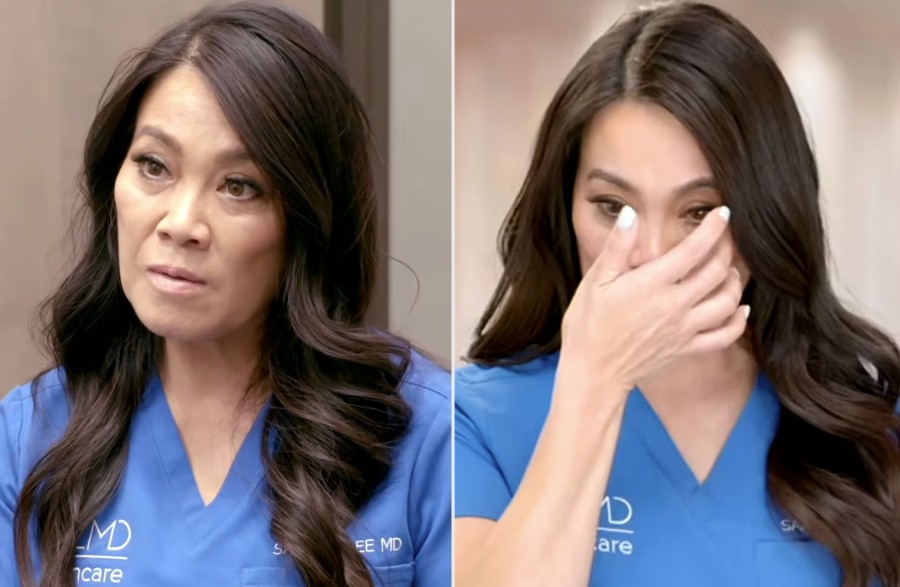
Dr. Sandra Lee is opening up about a frightening health scare that nearly changed everything—and she says the experience still affects her every single day.
Sitting in her Los Angeles home, the celebrity dermatologist says she’s now hyper-aware of how she speaks after suffering a stroke last November. “I notice it right now that I don’t speak exactly the way I used to,” she admitted, revealing she still deals with slight hesitation and mild slurring.
The 55-year-old, best known for her hit show Dr Pimple Popper Breaking Out, says the moment it happened was anything but dramatic at first.
“I thought it was just a hot flash,” she recalled. While filming at her California practice, she suddenly became sweaty and didn’t feel like herself. Later that night, things got worse—she felt restless, had shooting pains in her leg, and struggled to walk.
By the next morning, the warning signs were impossible to ignore.
“I would hold my hand out, and it would just slowly collapse,” she said. “I had trouble speaking… I thought, ‘Am I having a stroke?’”
Her father, also a doctor, urged her to go straight to the emergency room—and he was right. An MRI confirmed she had suffered an ischemic stroke, caused by a blockage cutting off blood flow to part of her brain.
“It was just a shock,” Lee said. “As a physician, I knew what was happening… but part of me kept thinking, ‘This can’t be real.’”
She later learned that part of her brain had died.
Filming immediately stopped as Lee focused on recovery, spending two months in intense physical and occupational therapy. She says one of her biggest fears was losing control of her hands—something critical to her work as a surgeon.
“I don’t like that I don’t have total control of my left hand,” she admitted. “If I feel like I’m not at my best, it’s very scary.”
Doctors say she’s been lucky, with most of her symptoms now improved. But the experience forced her to take a hard look at her health.
Lee revealed her blood pressure and cholesterol weren’t under control, and stress from her demanding career played a role.
Still, she’s choosing to see the ordeal differently.
“I want to think about it as a blessing in disguise,” she said. “It reminds you to take better care of yourself.”
Returning to work in January wasn’t easy. She says she even questioned whether she could still perform surgeries, admitting the experience left her with lingering anxiety.
“There’s a lot of PTSD because it happened while I was filming,” she said.
Now, with support from her team and ongoing therapy, Lee says she’s “pretty much back to normal”—but her perspective has completely changed.
She’s also speaking out to raise awareness, especially in communities where strokes are often kept quiet.
“I want people to know—if you feel symptoms like I did, go see a doctor,” she said. “Take care of yourself.”