

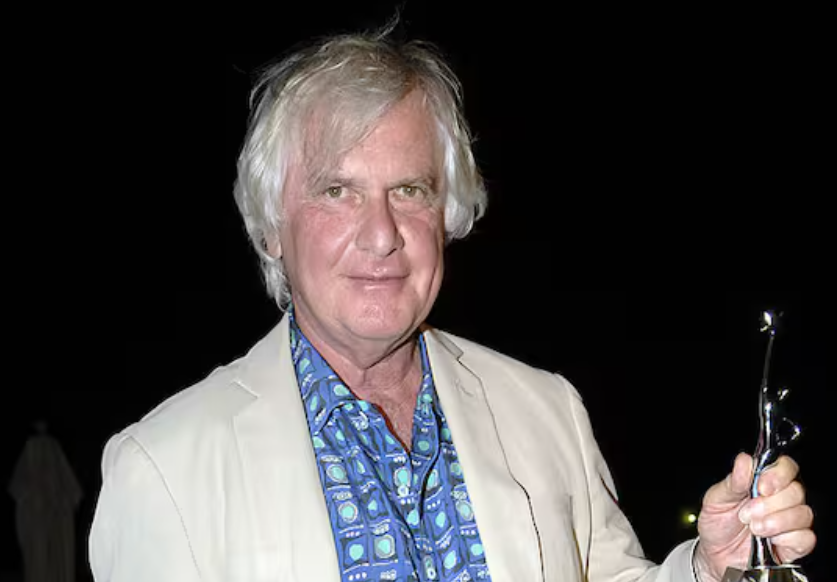
Veteran Hollywood director Peter Medak, whose remarkable six-decade career included some of television’s most acclaimed dramas and one of cinema’s most beloved horror classics, has died at the age of 88.
The Hungarian-born filmmaker passed away peacefully in Los Angeles on Tuesday, October 27, his family confirmed. No cause of death has been publicly disclosed.
Medak was best known for directing the 1980 supernatural thriller The Changeling, starring George C. Scott, but his impressive career extended far beyond the big screen. He also directed episodes of hit television shows including Breaking Bad, The Wire, The Twilight Zone, House and Chicago Hope, earning a reputation as one of the industry’s most versatile filmmakers.
His death marks the loss of a director whose extraordinary journey took him from war-torn Europe to the heights of Hollywood, where he worked alongside some of the biggest names in entertainment.
Born in Budapest, Hungary, in December 1937, Medak experienced a childhood shaped by turmoil. His Jewish family was forced into hiding during World War II, and he later endured life under Hungary’s Communist government. His father was imprisoned, and his family suffered considerable hardship before Medak fled the country during the Hungarian Revolution of 1956.
He eventually settled in England, where his fascination with movies became a lifelong profession. Starting as a trainee in the British film industry, he worked his way through various production jobs before making his feature directorial debut with the 1968 psychological drama Negatives, starring future two-time Academy Award winner Glenda Jackson.
His breakthrough arrived in the early 1970s with the dark satire The Ruling Class, starring Peter O’Toole as an eccentric British aristocrat who believes he is Jesus Christ. The 1972 film became a cult favorite and earned O’Toole an Academy Award nomination for Best Actor.
But it was The Changeling that would become one of Medak’s most enduring achievements. Released in 1980, the chilling ghost story followed a grieving composer who moves into an old mansion, only to discover that the house harbors terrifying secrets.
The film earned widespread acclaim and eventually became a horror classic, attracting admirers including legendary directors Martin Scorsese and Steven Spielberg.
Medak later turned his attention to Britain’s criminal underworld with the 1990 gangster drama The Krays, starring Gary and Martin Kemp as notorious twin brothers Ronnie and Reggie Kray. He followed that success with Let Him Have It in 1991 and the 1993 crime thriller Romeo Is Bleeding, starring Gary Oldman.
Despite his success, Medak’s career was not without painful setbacks.
One of his most troubled experiences came while directing the 1970s pirate comedy Ghost in the Noonday Sun, starring Peter Sellers. The production was plagued by behind-the-scenes difficulties, including clashes involving its unpredictable leading man, and the film ultimately failed to secure a conventional theatrical release.
Decades later, Medak revisited the ordeal in his 2018 documentary The Ghost of Peter Sellers, offering a deeply personal examination of a project that had haunted him for much of his career.
His television work proved equally impressive. Across dozens of episodes, he contributed to acclaimed series such as Homicide: Life on the Street, Hannibal, Law & Order: Special Victims Unit and The Sopranos, demonstrating an ability to move effortlessly between crime dramas, psychological thrillers and character-driven storytelling.
He also directed music videos for major artists including Peter Gabriel and Pink Floyd, while expanding his creative talents into opera productions in Minneapolis and Los Angeles.
Following news of his death, actor Malcolm McDowell, 83, paid an emotional tribute to his longtime friend, recalling their early collaboration on the 1970 film Figures in a Landscape.
McDowell remembered Medak as a wonderful director and cherished friend, saying their relationship had endured for decades. His tribute ended with a simple expression of affection for the filmmaker he had known since the beginning of his career.
For Medak, filmmaking was never simply a profession. It was an obsession that remained with him throughout his life, even when he was not standing behind a camera.
He once explained that true directors never really stop making movies, because their imaginations continue creating stories regardless of whether they are actively working.
That passion carried him through extraordinary personal challenges, Hollywood successes and professional disappointments, leaving behind an extensive body of work spanning generations of moviegoers and television audiences.
Medak is survived by his four children, Christopher, Cornelia, Joshua and Karen, along with five grandchildren, Sacha, Marlowe, Ryden, Oliver and Anders.
He was previously married to Katherine La Kermance, actress Carolyn Seymour and opera singer Julia Migenes.
Although Medak spent much of his life working behind the scenes, his influence lives on through the countless films and television episodes he helped bring to life.