

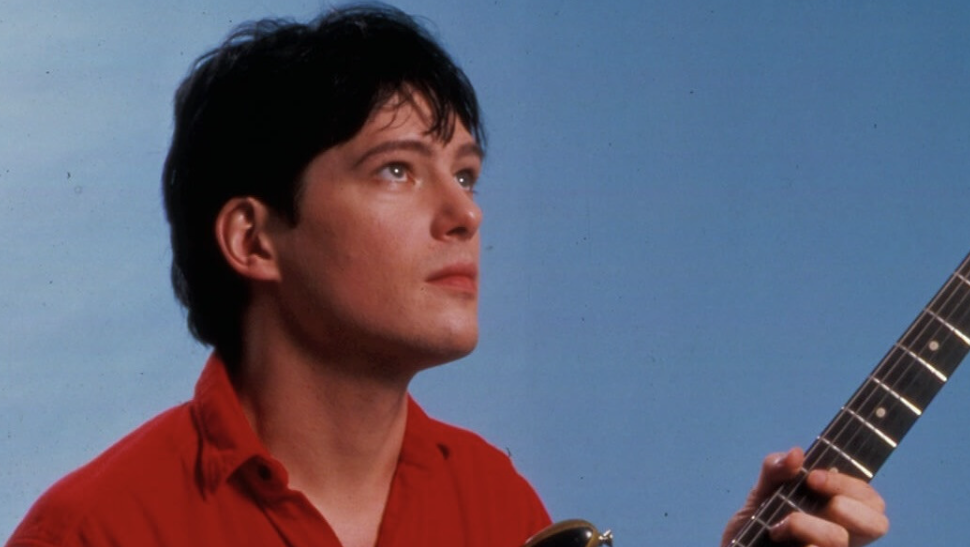
Richard Lloyd, the legendary guitarist and co-founder of the influential rock band Television, has died at 75 following a battle with cancer, leaving the music world mourning a pioneering musician who helped shape the sound of punk and alternative rock.
Lloyd died Saturday, November 7, at his home in Chattanooga, Tennessee, just eight months after being diagnosed with bile duct cancer.
His family confirmed the heartbreaking news, revealing that his wife, Sheila, and beloved dog, Willie Mays, were by his side during his final moments.
“His loving wife Sheila and his dog Willie Mays were with him at the end,” the family said in a statement to Rolling Stone.
The guitarist was diagnosed in March with cholangiocarcinoma, an aggressive form of cancer affecting the bile ducts. As his condition worsened, doctors discovered tumors in his liver, including one positioned dangerously close to a major blood vessel that made surgery impossible.
A fundraiser launched earlier this year sought financial assistance for his mounting medical expenses as he continued receiving treatment.
Despite the devastating diagnosis, friends recalled Lloyd remaining determined and hopeful.
Musician Bibi Farber shared an emotional tribute following his death, remembering how Lloyd initially approached his diagnosis with humor and optimism.
“In March, when he told me about the inoperable tumor, he was so full of determination, cracking jokes, in high spirits, adamant that he was going to beat it,” she wrote.
His death marks another significant loss for Television, the groundbreaking New York band that helped redefine rock music during the 1970s.
Born in Pittsburgh in 1951, Lloyd grew up in New York City and began playing guitar at age seven. Inspired by the Beatles and the rapidly changing rock scene, he developed a distinctive playing style that would eventually make him one of the most respected guitarists of his generation.
In 1973, Lloyd joined forces with Tom Verlaine, Richard Hell and Billy Ficca to form Television, a group that became central to New York’s emerging punk movement.
The band quickly became a fixture at the legendary CBGB nightclub, performing alongside rising acts such as the Ramones, Blondie and Patti Smith.
While many early punk bands favored short, aggressive songs, Television distinguished itself with intricate guitar arrangements and extended instrumental performances.
Lloyd’s remarkable chemistry with fellow guitarist Verlaine became the band’s defining sound.
Their 1977 debut album, Marquee Moon, is now considered one of the most influential rock records of its era. Its title track, a nearly 11-minute showcase of interlocking guitars, became a landmark recording that inspired generations of musicians.
Television followed with Adventure in 1978 before breaking up amid internal tensions. The group reunited in 1992 for a third studio album.
Lloyd also built a successful solo career, releasing nine albums and collaborating with artists including Matthew Sweet, whose acclaimed 1990s recordings featured his unmistakable guitar work.
His former bandmate Verlaine died in January 2023 at age 73, making Lloyd’s passing another painful chapter in the history of the pioneering group.
Following news of his death, fellow musicians and longtime fans flooded social media with tributes celebrating his extraordinary influence.
Johnny Marr, the former guitarist for The Smiths, was among those honoring Lloyd, reflecting the admiration he inspired among generations of rock musicians.
Although Television never achieved the massive commercial success of some of its contemporaries, its influence extended far beyond record sales, helping inspire bands such as R.E.M., Sonic Youth and U2.
Earlier this year, Lloyd reflected on his remarkable career and the musical legacy he hoped to leave behind.
“I wanted to make a dent in rock history,” he told Guitar World. “That was my goal, and that came true.”
Lloyd is survived by his wife, Sheila, his son, Dylan, and his brother, Eric.
For fans who grew up listening to Television’s groundbreaking records, his death marks the loss of a musician whose fearless creativity changed the direction of rock music and whose influence will endure for generations.