

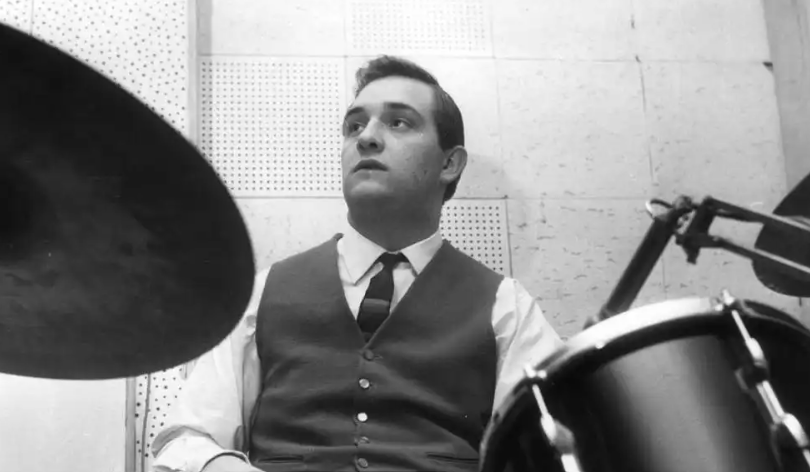
Legendary British drummer Clem Cattini, who helped shape the sound of rock and roll, played on dozens of chart-topping hits and nearly joined Led Zeppelin, has died at the age of 89.
Cattini died Monday, November 2, in London following a fall at his home, according to reports. His death has prompted an outpouring of tributes from fellow musicians and fans who remember him as one of the most influential drummers of his generation.
Although his name may not have been instantly recognizable to American music fans, his drumming could be heard on countless recordings that defined the 1960s and 1970s.
Throughout his extraordinary career, Cattini performed on at least 42 No. 1 singles in Britain, working with major artists including Tom Jones, Dusty Springfield, the Bee Gees, Cliff Richard, Donovan, the Kinks and Lou Reed.
And in one of music history’s most intriguing twists, he almost became the original drummer for Led Zeppelin.
Born Clemente Anselmo Agustino Cattini on August 28, 1937, in London, he grew up in an Italian family and initially worked in his father’s restaurant. His passion for music eventually led him to the thriving rock-and-roll scene in London’s Soho neighborhood, where he began performing in coffee bars.
His first major break came when he joined Johnny Kidd & the Pirates, playing drums on their 1960 hit “Shakin’ All Over,” which reached No. 1 in Britain.
Interestingly, one of the song’s most memorable drum breaks was apparently an accident.
Cattini later recalled that he had made a mistake during the recording, but the producer liked the result so much that he decided to keep it.
Two years later, Cattini became part of music history as a founding member of the Tornados.
Their 1962 instrumental hit “Telstar,” produced by Joe Meek, became a sensation on both sides of the Atlantic. The futuristic recording made the Tornados the first British group to reach No. 1 on America’s Billboard Hot 100, more than a year before the Beatles achieved the same milestone.
Cattini later revealed that the song’s distinctive, galloping drum rhythm had been his idea.
After leaving the Tornados, he became one of Britain’s busiest session musicians, appearing on hundreds of recordings despite never learning to read traditional musical notation.
His remarkable sense of rhythm made him a favorite among producers, who repeatedly called on him to help create hit records.
But his demanding schedule also cost him a place in what would become one of the biggest rock bands in history.
Before Led Zeppelin formed, future manager Peter Grant approached Cattini about discussing a new musical project. However, the drummer was so busy with recording sessions that he never found time for the meeting.
The opportunity eventually went to John Bonham, who became one of rock music’s most celebrated drummers.
Cattini later insisted he had no regrets about missing the chance.
He also turned down an opportunity to join Paul McCartney’s band Wings, explaining that after years of performing on the road, he preferred the stability of studio work and spending nights at home.
Despite passing up those opportunities, Cattini continued building an extraordinary musical legacy.
His recordings included Donovan’s “Hurdy Gurdy Man,” Cliff Richard’s “Devil Woman,” and Tony Christie’s “(Is This the Way to) Amarillo.” He also contributed to recordings by the Walker Brothers and numerous other major acts.
His versatility allowed him to move effortlessly between rock, pop, ballads and novelty hits, making him one of the most dependable musicians in the recording industry.
Following his death, Christie paid an emotional tribute to the drummer, remembering not only his enormous musical talent but also his kindness.
“Not only a world class musician but also a world class gentleman,” Christie said, adding that he was proud to have known him.
Cattini remained involved in music well beyond the height of his career, later publishing a memoir titled My Life, Through the Eye of a Tornado in 2019.
He often described himself modestly as a working musician rather than a superstar, despite contributing to some of the most recognizable songs in popular music history.
Cattini is survived by his wife, Anna, and his family.
His death marks the loss of a musician whose extraordinary career helped define generations of popular music. While millions of listeners may never have known his name, they certainly knew the unforgettable songs he helped bring to life.
 What's Up Today Editorial Team